You can download the pdf for free. Click here.
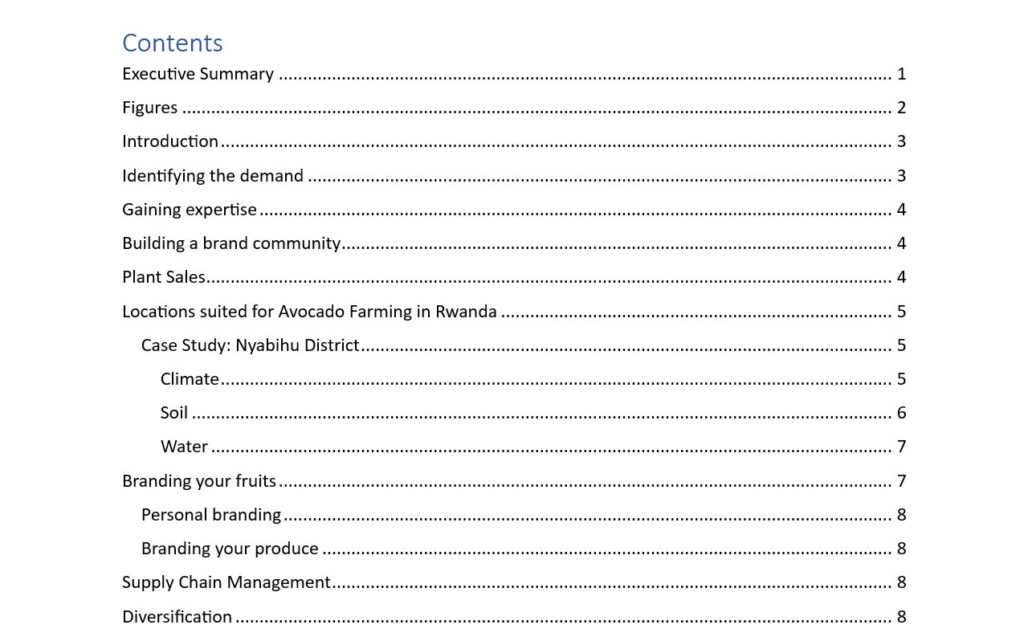
Executive Summary
In this report I have shared why Avocado farming can prove to be a profitable business option for farmers in Rwanda. I have investigated how the demand already exists, and how enterprising farmers can gain expertise and establish themselves as local avocado experts.
Using the case study of Nyabihu District, I have demonstrated how it is suitable for commercial avocado farming. I have then suggested that the most sustainable way ahead is to brand your avocados and use it as a go-to market strategy to diversify into other healthy products and keep the supply chains short.
I have then touched on different business aspects including but not limited to Supply Chain Management, HR Management, Legal and Finance.
Towards the end, I have suggested 2 options for Rwandan agriculture policy makers, first is the Limpopo Barbarian strategy that will come at the expense of reduced Gorilla population and second is the decentralised Indo Israel Avocado strategy. It is up to the Rwandan agriculture policy makers to decide which one is the sustainable way forward.
I have also given references to support my case. For further queries, I can be reached at indoisraelavocado@gmail.com
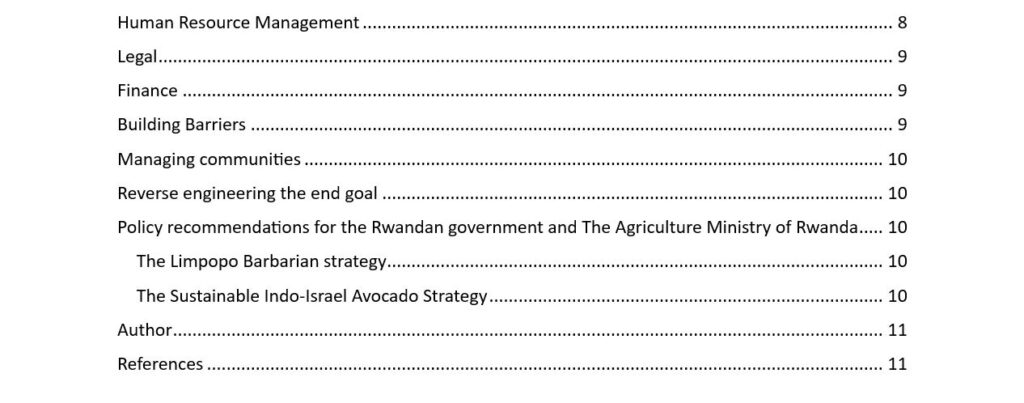
Introduction
I often daydream about what I will do after retiring. And as we all know, an idle mind is the devil’s workshop, so I usually engage in netnographic research to find options on where to consult or do business next.
Since, I already have an expertise in avocado farming, my mind automatically leads me to search for the possibility of the next bull market in the avocado farming industry.
During my research, I found out that Rwanda has been quoted by some as the Singapore of Africa.
Psychologically, Singapore is associated with being a high trust society, thanks to the hard work of the Prime Minister, Lee Kuan Yew. So am assuming President Paul Kagame is taking Rwanda to a similar direction, and the track record makes it evident.
So, if Rwanda is a high trust society with minimum corruption and since its neighboring Tanzania, Uganda and Kenya are already growing avocados, odds are that avocado can be grown in Rwanda as well, that too in a sustainable manner.
As my predictions are usually right, the following report will explain how avocado farming can be a profitable business for farmers in Rwanda.
Identifying the demand
The Rwandan avocado industry would need entrepreneurs who will first establish the local avocado nurseries there. It is these entrepreneurs and nursery owners who will slowly build the avocado industry in Rwanda. Therefore, it is important for them to remain profitable from the get.
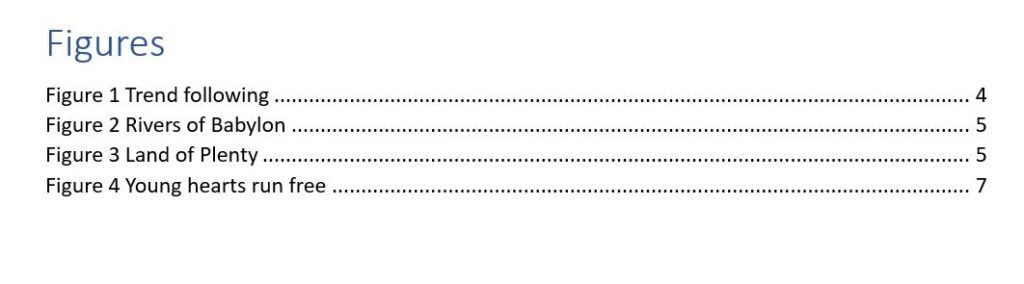
Instead of trying to create a demand where there is none, I am a strong proponent of following the trend. So first, these avocado entrepreneurs need to identify their 1000 true fans. This will be their minimum viable audience.
As evident in the google trends keyword search, farmers in Rwanda are already looking for Avocado plants there. It is the job of the entrepreneur to create a brand community and not only sell them high quality avocado plants but also equip them with knowledge and give them the gift of identity.
Gaining expertise
You can quickly gain expertise on avocado. Start with the book, Avocado: Botany, Production & Uses. Then read the blog and video blogs by the most handsome avocado farmer in the world. Simultaneously watch his YouTube channel. Additional reading material can be found on Avocado Source. This will give you the theoretical tool kit, but you will also need practical knowledge. What are the chances that the most handsome avocado farmer in the world also happens to be a teacher. Lol.
Building a brand community
Create content about avocado farming and have an omni channel strategy for distribution. If you publish relevant, useful and personal content on a daily basis, people will follow. Eventually these people will buy. It also helps to collaborate with an industry insider who has already been doing this for a while 😉, but only if you can win him over (better not be fat).
Don’t be afraid of the local competition. At the top level, you will have a capability building competition. And each one of you will have a separate audience. Some will buy from you and some won’t. You don’t need to sell to everyone; you simply need to sell to your true fans. The one with the search monopoly wins, so have a search oligopoly instead. But remember, brand communities are just ex-post rationalisations of consumer tribes.
Plant Sales
Once you have identified the demand as well as your 1000 true fans, and they are in your funnel. Then converting the prospect and generating positive net cash flow is the mark of a true sales man.
Do not seek venture capital, because money comes with strings attached. Maintain your freedom.
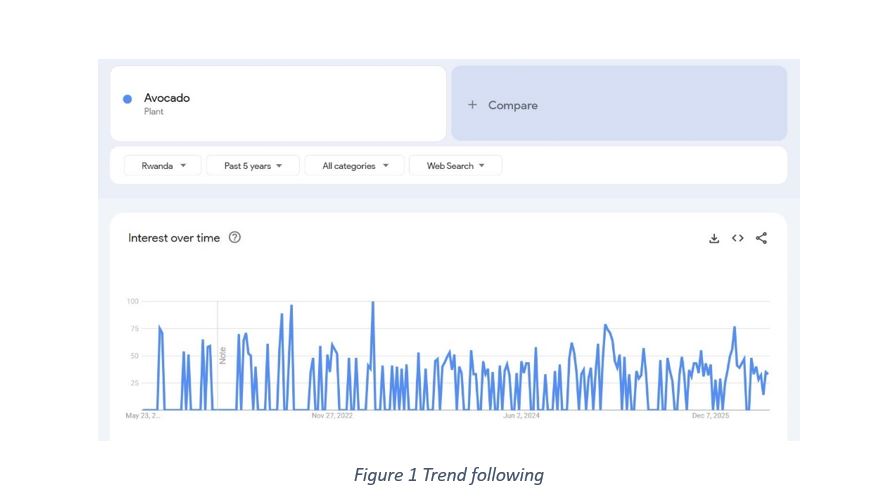
As evident in the map below, avocado farming has search interest in all the provinces in Rwanda.
Locations suited for Avocado Farming in Rwanda
As I don’t have any serious contacts in Rwanda, I haven’t analyzed any soil test reports from there yet. However, I do know that Virunga mountains are part of a volcanic mountain range, thanks to the Netflix show, Our Great National Parks.
Volcanic soil is great for avocado farming. Probably even better than the soils I am currently working on in India. While there are multiple locations where avocado orchards can be commercially grown in Rwanda, we will take the example of Nyabihu District in Western Province of Rwanda.
Case Study: Nyabihu District
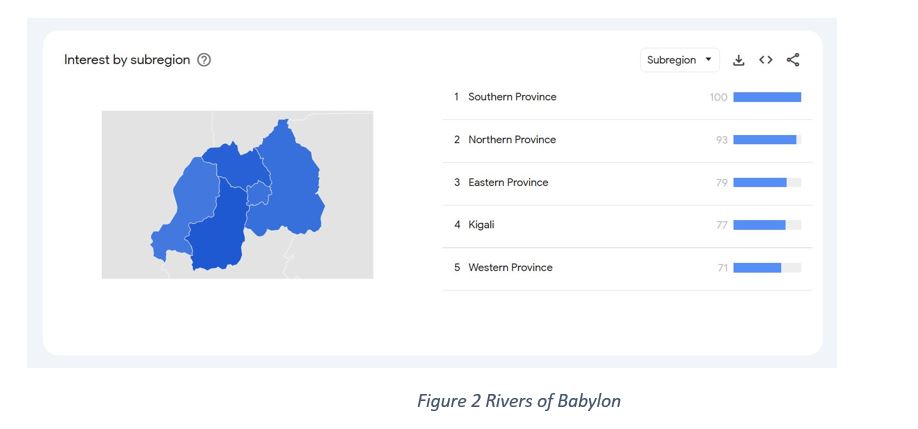
The modelled climate data suggests –
- Good rainfall
If we take the total, Nyabihu area receives 3100 mm rainfall. We do not take full amount as the effective amount so we divide it by half, that gives is 1550 mm. Avocados need 10,000M^3 per hectare. So, on paper, the rain fall fulfils the water requirement. However, you will still need to fertigate your trees, and water-soluble fertilisers are the best solutions. Not only because you can give a precise dosage, but also because it is less labour intensive. Therefore, you will need to install a drip irrigation system and give a concentrated dose of fertilisers daily if you want consistently high yields throughout the life cycle of the orchard.
If you want to learn how to apply precision fertigation to your avocado orchards in Rwanda using Israeli techniques, click here. - Highest Temperature
On the higher side, the modelled data suggests that the temperature hovers around 22 degrees Celsius. This is incredible, you will not have a problem growing any variety of avocado. While, I know that Hass is indeed the current dominant variety in the market, still I do suggest planting Lamb Hass, Pinkerton, Ettinger, Reed, Lavi and Iriet along with Hass. The reason is, you can’t predict extreme climatic events and each variety has different degree of stress tolerance to such events. If you hedge the risk of the orchard, you will have consistent profits in the long run. Also, it is known that Fuerte was the dominant variety before Hass, at some point, Hass will also get replaced. So, I will repeat myself, hedge the risk. - Lowest temperature
Avocados need temperature below 14 degrees to induce flowering. The data above suggests no such issue as the temperature on the minimum side remains around 12 degrees.
- Elevation
While established knowledge does say that avocados require higher altitudes to grow and produce fruit. But my experience of growing Avocados in 18 states in India suggests otherwise, if you look beyond Hass.
Soil
I have yet to read any soil test reports from Nyabihu district. But the area is famous for volcanic soils. As mentioned above, volcanic soils are ideal for avocado farming. These soils are well drained and highly porous. Thus, providing ample oxygen and no water stagnation at the root system.
However, the rainfall is heavy, so there is a high chance that soil can be acidic. You can use calcium carbonate or dolomite to increase the ph. Make sure to test the following before proceeding with avocado farming –
- Soil Salinity – EC, PH sodium absorption ratio
- Soil Texture – Sand, Silt & Clay %
- Soil Fertility – NPK and Micro nutrient analysis
- Additional but important – calcium, magnesium
This will help you decide the correct rootstock. I have had incredible results with Ashdot, Degania and Fairchild. These rootstocks from Israel have stood the test of time so you can’t really go wrong with these.
Beware of snake oil salesmen who want to sell you phytophthora resistant rootstocks even when it’s not a serious problem. In case you encounter phytophthora, a simple and consistent treatment of oxathiapiprolin will take you further than the sub-standard so called “phytophthora resistant” rootstock like Dusa. Furthermore, if oxathiapiprolin isn’t available, try Mancozeb & Metalaxyl.
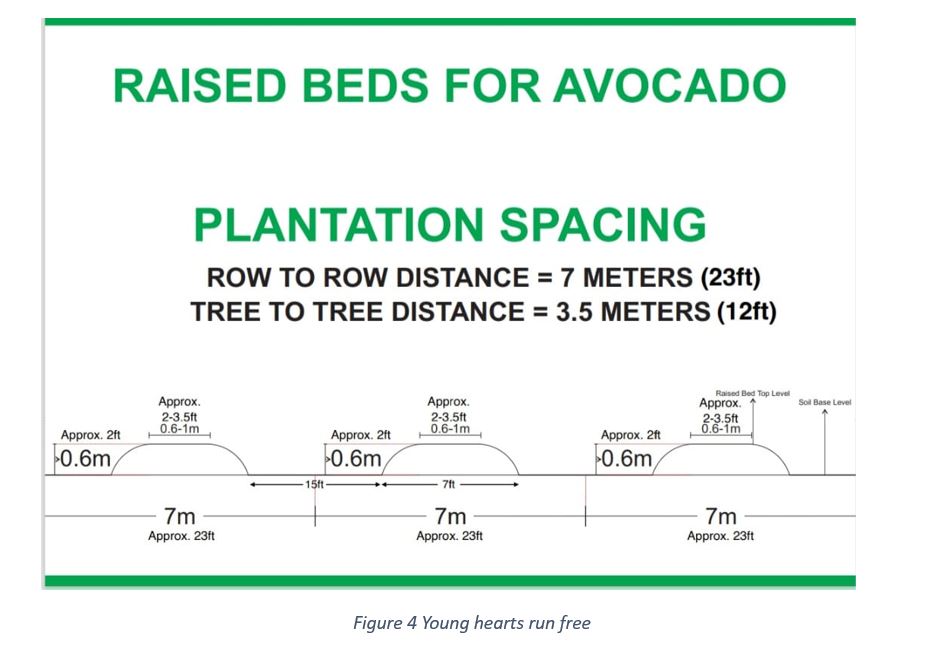
Often, what you diagnose as phytophthora is just over watering. So, plant on raised beds.
Water
As mentioned above, for consistent high yields, you will need to apply water soluble fertilisers through your drip irrigation system.
Make sure to get your water tested as well,
- Water EC
- Water Ph
- Water TDS
- Chloride content
With this, I would like to conclude the case study of Nyabihu District in Rwanda.
If you too want to learn if you can grow avocados or not, you can buy my course Can you grow Avocados? Click here.
Branding your fruits
While both personal branding and branding your fruits are inter-linked. It is important that you create a brand around your fruit as well.
Personal branding
This helps in building the network and you not only get social capital, but also insider knowledge. Once you prove to your audience that you can sell your fruits at a premium, they will buy more plants from you and will come to you for selling. Network effects will propel you to the industry leader status in your region.
Branding your produce
I have seen enough farm to table business models. Almost always, the founders of these “innovative” business models are retards. Play the traditional game. Avocado is a status symbol for the health community. So, give them a reason to buy your produce. Your positioning, advertising, and distribution has to align under an ideology the health community can subscribe to.
Due to non-disclosure, I can’t share my strategy in India. However, if you need help in this aspect, I do offer paid consultations. My email is indoisraelavocado@gmail.com
Supply Chain Management
Odds are, you are thinking about exporting your avocados to Netherlands, China or Middle East. And most of you will. To the one person who might take my suggestion seriously, build a regional health brand and keep avocados as your star product and then diversify to other products, ideally the healthy ones.
Shorter the supply chain, more sustainable the business will be. With the onset of the fourth turning, this will prove to be the most sensible way of doing business.
Diversification
As a health brand, you have the options of diversifying into primarily three categories
- Fats: Avocado, Ghee, Butter
- Protein: Milk, Fish, Lamb, Pork and Buff (or if your country allows beef)
- Carbs: Sub topical fruits like Avocado, Dragon fruit, Mango, Lychee, Sapote
I have purposefully avoided grains; grains are not needed for a healthy diet. And most of the local farmers will typically grow grains anyway as their first choice of product. So, you don’t really need to do it.
Human Resource Management
You might be thinking how can you gain expertise in all of the above-mentioned crops and items. You don’t have to. Gaining expertise on Avocado would be your go-to market strategy. Once that happens, you would have successfully established yourself as an expert in Avocado farming and have a personal brand, then you can connect and collaborate with other experts in your region and build a farm or a shop that has multiple sources of income. A Kibbutz of sorts or maybe a grocery store.
It will also help if you don’t underpay your employees. When you have the means, make them your partners because remember, knowledge flows both ways, you can teach them about avocado farming and they can teach you about local ways of doing business.
Legal
Make sure to fulfil all the legal paperwork regarding land holdings, licenses, permissions. Avocado is a meme, if you enter this industry, you will attract attention. While most of the times, attention is usually good but you will also attract a few bad actors. You need to keep your paper work bulletproof.
You might need –
- a lawyer to handle Intellectual Property,
- a Chartered Accountant to handle the book-keeping,
- a CHA to figure out import and export of planting material and
- admin staff to handle all the paperwork and manage it into files for easy access.
Finance
I don’t know much about market prices of avocado and other grocery products in Rwanda. But wisdom of the crowds suggest it will automatically get positioned as a premium fruit. Use associative conditioning to position the entire brand as a health brand and charge a premium.
Competition
This might seem as a blue ocean strategy on the surface, but selling avocado plants and fruits is your go-to market strategy. Eventually, cheap copies come along and will turn the ocean red. That shouldn’t be a problem for you.
Let the cheap players turn the market red, this will only increase the Total Addressable Market for you. Since you would have positioned your brand as a premium health brand, you will earn more profit % per item sold than your competitors.
Building Barriers
While you need the competition so that more and more people join the brand wagon, you still need to create barriers because we are not in the business of offering free lunches to the competition.
Tips on creating barriers on a low budget–
- Start a blog, work towards search monopoly
- Start a Youtube channel, post videos daily (do influencer marketing to get started)
- Start an Instagram account and gain around 50k followers
- Don’t forget linkedin & facebook
Remember, time stamps are as important as subscriber numbers. The best time to plant an avocado tree was 20 years ago, the second-best time is now. Additionally you can also create digital courses on avocado farming specific to your region and generate some passive income along the way.
Managing communities
If you follow the advice given in this strategy document, you will develop a thriving virtual community on your phone. People will offer unwarranted advice that may or may not be useful. I will let you in on a simple trick I use on whether to take their advice seriously or not,
Ask yourself the following questions –
- Is the person fat? If yes, reject his suggestions.
- If the person is fit, does he have a solid track record of work? Yes? you may proceed but with caution.
- If he is fit, has a solid track record of work and gets laid often? Odds are, he is not trying to extract value, take his advice seriously.
Reverse engineering the end goal
Why we do what we do? If the answer is money, ask your self why three more times.
My goal is to have enough money to pursue my hobbies like Mixed Martial Arts, Drumming and Travelling while keeping my health and conscience intact. Business and money for me are a means to hire the best teachers in the world. If this is your goal too, your business would automatically become sustainable.
Policy recommendations for the Rwandan government and The Agriculture Ministry of Rwanda
Avocado farming is coming to Rwanda, sooner than you can imagine. There are two strategies I could identify that the policy makers can take which will develop the avocado industry there –
The Limpopo Barbarian strategy
One way to do it is allowing the Limpopo company to lease 1000s of acres of fertile land and let them clear out entire forests which were meant for the Gorilla. They will entice you with the promise of the green gold, but they will be the ones to crash the market by buying low and selling high and keeping all the premium to themselves at the expense of the avocado farmer.
Furthermore, they will show complete disregard for the local laws and will easily bribe their way to import 38,000 illegal avocado planting material from their nursery in Tzaneen. And then they will call themselves sustainable, by being completely blind to their own hypocrisy.
You have been warned, invite the Limpopo Barbarians through your gates and let them treat you like slaves.
Or you can follow the Indo Israel Avocado Strategy explained below.
The Sustainable Indo-Israel Avocado Strategy
What if, you follow a more decentralised way of organising the farmers into a Moshav. Supply chains will be shorter, risk would be hedged across multiple products, profits will be more evenly distributed through out the supply chain, consumption would be local and the population would become healthy. Another important thing to note is that a healthier population also allows for a better military service. Namaste.
Author
Harshit Godha is the pioneer of the Indian avocado industry. He learnt avocado farming in Israel at Kibbutz Ma’agan at the age of 21. His exploits are well documented throughout the internet.
He is known for his sharp wit and timeless wisdom particularly among women, that he has acquired through voracious reading, writing and real-life experiences.
While he does have a Business degree from the University of Bath, UK but he is still angry with his professors because they needed more references. He is 30 years old now and enjoys free time with his Thai-Chinese girlfriend in Bangkok. When not on a vacation, he can be found at his Indo Israel Avocado farm in Bhopal, Madhya Pradesh, India.
Contact –
Email: indoisraelavocado@gmail.com
WhatsApp: +91 9109107400
Phone call: +91 7722800885
You can download the pdf for free. Click here.
References
Cova, B., Kozinets, R. V., & Shankar, A. (Eds.). (2007). Consumer tribes. Butterworth-Heinemann.
Godin, S. (2008). Tribes: We need you to lead us. Portfolio.
Holt, D. B., & Cameron, D. (2010). Cultural strategy: Using innovative ideologies to build breakthrough brands. Oxford University Press.
Howe, N., & Strauss, W. (1997). The fourth turning: An American prophecy. Broadway Books.
Obama, B. (Narrator). (2022). Our great national parks [TV series]. Higher Ground Productions, Wild Space Productions, & Freeborne Media. Netflix.
Robertson, B. J. (2015). Holacracy: The new management system for a rapidly changing world. Henry Holt and Company.
Schaffer, B., Wolstenholme, B. N., & Whiley, A. W. (Eds.). (2013). The avocado: Botany, production and uses (2nd ed.). CABI.